
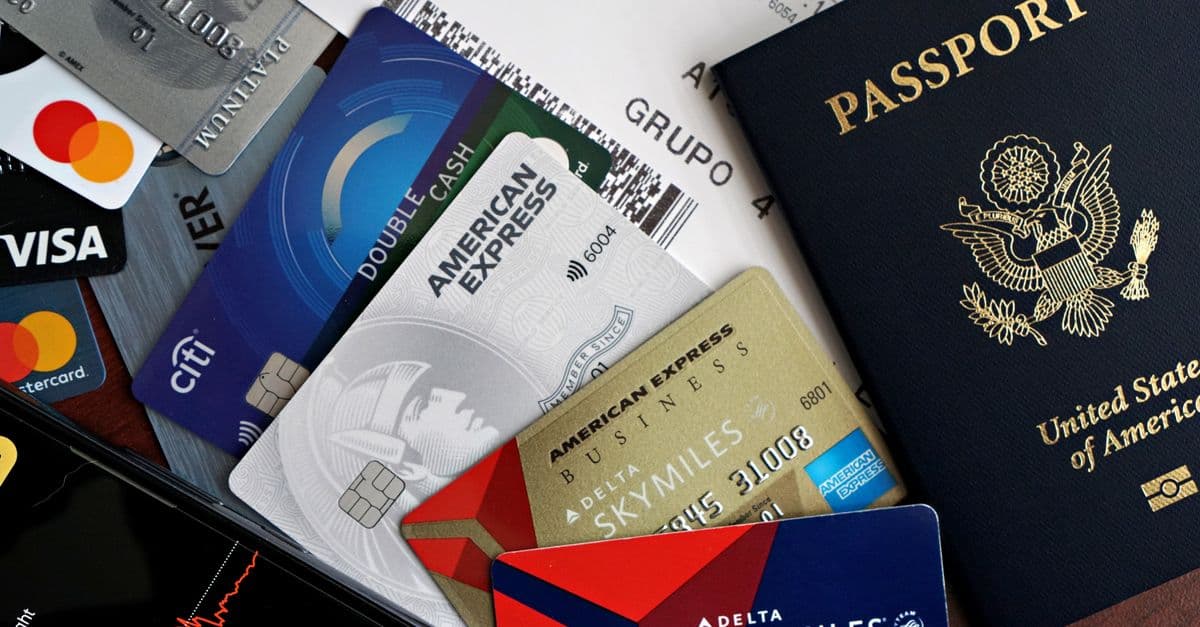
80,000 Avios. Two years of coffee-shop card spending, a well-timed sign-up bonus, and the occasional hotel stay charged to the right account. You've been told this is enough for a business-class seat to Tokyo. Then you open the British Airways website and discover that the taxes and fuel surcharges alone come to £680 per person — which is roughly half of what an economy cash fare costs in the first place. Miles can be genuinely valuable or they can be theatrical. Knowing the difference is the whole game.
The mileage economy has shifted considerably in recent years. Programmes that once published fixed redemption charts have moved to dynamic pricing, where the miles required for a seat track the cash price in near-real time. Sign-up bonuses have grown larger, then shrunk, then grown again. Fuel surcharges — the sleight of hand that can reduce a “free” flight to a modestly discounted one — have crept upward on some programmes and been largely eliminated on others. None of this makes miles worthless. It makes them harder to use well, and considerably easier to use badly.
The one number that matters: pence per point
Before evaluating any redemption, you need to calculate the value you're extracting per mile. The standard method is to ask: what would the equivalent cash ticket cost, and how many miles am I spending to get it?
The formula: (cash price minus the taxes and fees you'd pay anyway on the award) ÷ miles required = pence per point.
An example. A business-class return flight to New York retails at £2,800. The same flight costs 150,000 Avios plus £680 in taxes and fees. The miles are saving you £2,800 − £680 = £2,120 in real cash. Divide £2,120 by 150,000 miles and you get 1.41 pence per Avios point.
The benchmark most experienced collectors use: 1p per Avios is the floor for a justifiable redemption; above 1.5p is good; above 2p is excellent. Short-haul economy seats on British Airways frequently come in at 0.3–0.5p — so those 80,000 Avios spent on a London-to-Madrid return aren't the deal they initially appear. The same 80,000 Avios on a business-class seat to the Far East on the right partner airline might clear 2p comfortably.
Where miles genuinely pay off
The sweet spot for almost every loyalty programme is long-haul premium cabins — business class and first class. The reason is structural: cash prices for premium long-haul travel are high (£3,000–£10,000 for a return business-class seat to Asia or North America), while the miles required have historically been calibrated against those elevated prices with more generous ratios. Even on programmes that have moved to dynamic pricing, premium award space often surfaces at rates that look attractive against the cash fare.
The strongest redemptions available on UK-based programmes in 2026:
- British Airways Avios for partner business class — particularly Japan Airlines, Cathay Pacific and Qatar Airways. BA doesn't pass its own fuel surcharges through to partner airline redemptions the way it does on its own metal. A JAL business-class seat from London to Tokyo costs around 120,000 Avios one-way plus modest fees — and JAL business class is genuinely excellent product.
- Virgin Flying Club for Upper Class on the Virgin Atlantic network. Virgin's own cabin has become competitive again following its recent fleet refresh, and the programme still operates a semi-fixed redemption chart that prices some transatlantic routes well.
- American Express Membership Rewards transferred to Air France-KLM Flying Blue. Flying Blue runs monthly “Promo Awards” that discount redemption pricing by 25–50% on selected routes. Transfer Amex points during the right month and excellent value appears on transatlantic and African routes.
- Any programme for first-class redemptions on partner airlines that still publish fixed charts. True first class — Lufthansa, Singapore Airlines Suites, ANA — has cash prices that make even imperfect redemption maths look attractive.
Where miles rarely pay off
Short-haul economy. On most programmes, booking a European economy seat with miles extracts 0.3–0.6p per point — well below any reasonable benchmark. The cash prices are low enough that the maths rarely works. You are almost always better off keeping the points for a premium long-haul redemption and buying the short-haul seat in cash.
Economy class on long-haul routes is similarly inefficient on most programmes. The comfort improvement relative to cash-purchased economy is non-existent; sale fares frequently undercut the value that a miles redemption could deliver; and the pence-per-point calculation almost never clears 1p.
Hotel points are a related trap. The cash price for a hotel room is usually well below the theoretical rack rate that hotel programmes use when calculating their “savings.” Points redemptions at top-end properties can look impressive on paper — 60,000 points for a room that “retails” at £400 — but if that property is consistently bookable for £220 through a normal booking channel, you're extracting 0.37p per point. The same principle that governs flight miles governs hotel points: compare against the real cash price, not the rack rate.
Fuel surcharges — the number that changes everything
British Airways has long been criticised for passing carrier-imposed surcharges through to Avios redemptions, and in 2026 those charges remain significant: £300–£700 in fees per person on many long-haul routes on BA's own aircraft. This is a predictable feature of the programme rather than an anomaly — it is the mechanism by which BA extracts cash revenue from high-value Avios balances while still technically honouring the points.
The practical workaround is to route through partner airlines wherever possible. BA Avios can be used to book seats on Iberia, Finnair, Japan Airlines, Cathay Pacific, American Airlines and others, and on many of these partners the carrier-imposed surcharge is minimal or absent. A business-class flight from London to Tokyo on Japan Airlines, booked through BA's website using Avios, will cost significantly less in total cash outlay than the equivalent redemption on British Airways' own aircraft.
Virgin Flying Club, by contrast, passes lower fuel surcharges even on its own flights — a structural advantage worth factoring into any comparison. Understanding which programmes levy surcharges on which routes is as important as calculating the pence-per-point value.
Award availability in 2026
The single biggest practical frustration with miles redemptions is not value — it's availability. Most programmes now use dynamic award pricing, meaning that when a flight is popular, the miles required increase in line with the cash fare. At peak times on popular routes, the miles price can reach levels that represent poor value even for premium cabins.
A few approaches help:
- Search at the booking-window opening — typically 355 days before departure. Award space is usually most plentiful immediately after it releases and diminishes as demand builds. This is especially true for aspirational redemptions in business and first class.
- Look for partner award space rather than the airline's own flights. Airlines often release better award inventory on partner carriers than they publish on their own metal — for reasons that come down to revenue accounting rather than generosity.
- Build in date flexibility. A one-day shift in departure date or a connection through a different hub can unlock significantly better availability. Knowing your time zones matters more than it sounds when comparing connection options across continents.
- Monitor availability over time using tools like ExpertFlyer (subscription-based) which can alert you when a specific cabin opens up on a target flight.
Flexible points versus airline miles
One of the clearest strategic improvements a miles collector can make is shifting earning toward flexible point currencies — American Express Membership Rewards, Chase Ultimate Rewards, Capital One Miles — rather than earning directly into a single airline programme. Flexible points can be transferred to multiple airline and hotel partners, meaning you choose the transfer destination at redemption time based on current availability and value, rather than being locked into whatever a specific programme happens to have on offer.
The trade-off is that transfer ratios vary (Amex to Avios is currently 1:1, which is unusually good; many other partnerships run at 2:1 or worse), and transferred points cannot be moved back. But the optionality is genuinely valuable in a landscape where award availability and programme terms shift regularly. Collecting Amex Membership Rewards and deciding at booking time whether to transfer them to Avios, Flying Blue, or Virgin Flying Club gives you the best of three programmes rather than one.
The check to run before every redemption
Before committing miles to any booking, run through this sequence:
- Find the real cash price — not the headline fare but the all-in total including baggage, taxes and fees on a comprehensive fare-search tool. If the route is priced in a foreign currency, use a currency converter showing the mid-market rate to make sure you're comparing like with like.
- Subtract the fees you'd pay in the award redemption anyway — taxes, carrier surcharges, booking fees. Only the remaining saving is what the miles are delivering.
- Divide the remaining saving by the miles required to get pence per point.
- Compare to your personal floor — typically 1p for leisure travellers using points they've earned through normal spending. If points were expensive to acquire (annual fee cards, large transfer bonuses used at poor ratios), your floor should be higher.
- Check at least two partner redemption paths before settling on the most obvious route. The same destination can look very different across programmes once surcharges are factored in.
If the per-mile value clears your floor and you have better uses for the equivalent cash, book the award. If it doesn't, pay cash and keep the miles. The worst outcome is redeeming at 0.4p per point on a short-haul seat because the miles felt like they were “burning a hole” — a miles balance does not expire from neglect in the way a perishable good does (though do check individual programme expiry rules, as some lapse after 18–24 months of account inactivity).
One final consideration: the value calculation changes if you are earning miles by spending on a rewards credit card that charges a non-sterling transaction fee abroad. If you're paying 2.75% to use a card overseas in order to accumulate points, those points are not free. Our piece on the real cost of travel money covers the arithmetic in detail — and the maths frequently favours using a no-fee card abroad and forgoing the points entirely.
Tool tip
Our currency converter shows the live mid-market rate for 25 travel currencies — useful for sense-checking the cash price of flights quoted in USD, EUR or other currencies before deciding whether the miles alternative genuinely saves money.