
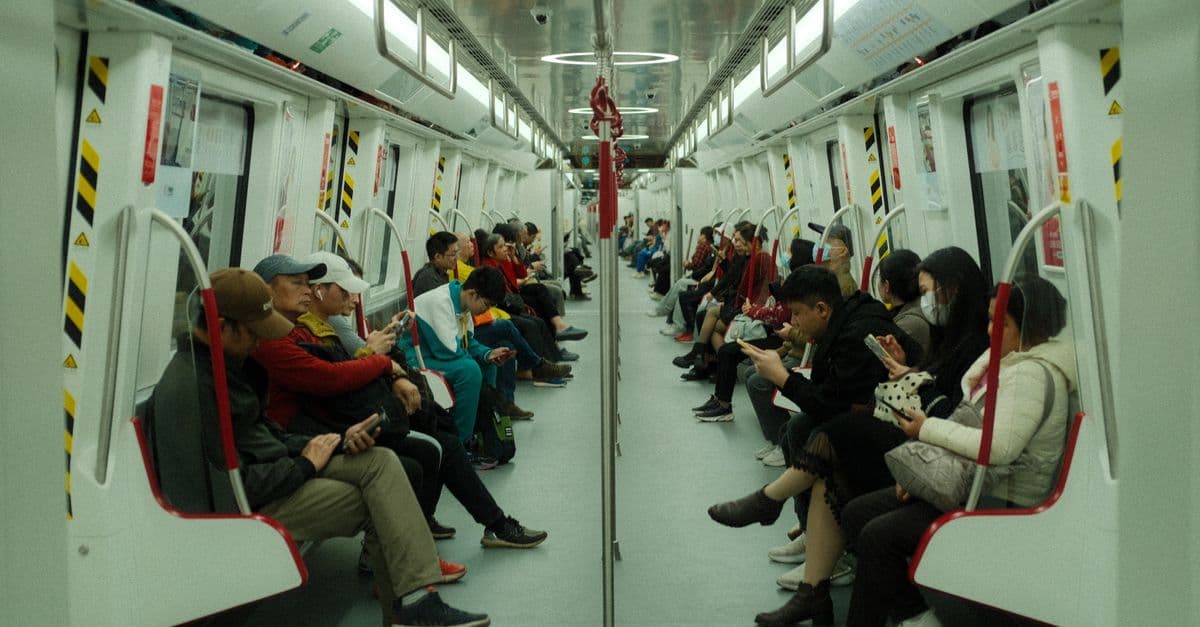
Platform 2, Bangkok's BTS Skytrain, 8 am on a Monday. The woman in front fumbles with a coin machine that only accepts exact change while the morning rush builds behind her. Three different fare zone maps are posted at different heights on the wall, in different colour schemes. The train is due in 90 seconds. This is the moment most first-time visitors to an unfamiliar city actually dread — not the flight, not the language barrier, but the transit system: a closed, rule-dense world designed entirely for people who already know how it works.
The good news is that navigating an unfamiliar city's public transport has never been more solvable in advance. The tools available in 2026 — offline mapping, contactless payment, real-time departure data, crowd-sourced bus tracking — make most of the logistical puzzle answerable before you land. The bad news is that the payment systems remain wildly inconsistent between cities, the apps that claim to solve everything still fail at the exact moment you need them most, and the gap between cities that are easy to navigate and cities that genuinely aren't is larger than most travel content admits. This is a guide to building a reliable process rather than hoping for good luck.
Research before you land
The most common transit mistake is arriving with no plan and expecting to work it out at the airport. This approach works in cities built for it — London, Tokyo, Singapore, Amsterdam — and fails in cities where the system is genuinely difficult to navigate cold: Cairo, most US cities outside New York, parts of Latin America, and anywhere the network is primarily bus-based without an obvious spine.
Thirty minutes of research before departure solves most of this. Four specific questions are worth answering:
- What type of system does the city have? Metro-first cities (Paris, Singapore, NYC, Seoul) work differently from bus-heavy cities and from tram-dominant cities like Amsterdam or Prague. Knowing the dominant mode before you arrive changes which app you prioritise and which station you need to find first.
- How does payment work? Does the system accept contactless bank cards directly, or does it require a city-specific transit card? This single variable is the most likely cause of a wasted 20 minutes standing at a machine on arrival. Getting it wrong means starting your trip flustered.
- Does the airport route require a separate fare? Airport express trains — the Heathrow Express, the Airport Rail Link in Bangkok, the Arlanda Express in Stockholm — almost never fall within the city transit network. They use separate fare structures, often considerably more expensive, and are not included in day passes or city transit cards.
- What are the night transport options? Many systems run a skeleton service or different routing after midnight. Paris shuts the metro and switches to a separate Noctilien bus network with different stops and numbering. Most US cities have effectively no late-night public transport outside Manhattan. Knowing this before you plan an evening out avoids a genuine inconvenience.
How to pay — the most variable part of any new transit system
Transit payment varies more widely than almost any other aspect of travelling. Some cities accept any contactless card on any reader. Others require a city-specific rechargeable card. A few have moved to app-based payment. Some still primarily use cash or tokens. The worst outcome — and a surprisingly common one — is arriving at a metro barrier with no local cash, a card the reader won't accept, and a SIM that hasn't yet activated to download the relevant app. Knowing which of the three main systems applies to your destination removes this entirely.
Direct contactless
London, Stockholm, Sydney, most of Western Europe and an increasing number of cities in Southeast Asia now accept any contactless bank card, Apple Pay or Google Pay directly on the reader. No local card needed, no machine required. The cost is that your bank's foreign transaction fee applies on each tap. Our guide to the real cost of travel moneycovers which cards charge for this and which don't — a fee-free travel card can make direct contactless genuinely cheaper than buying a local transit card for a short visit.
London's system adds a useful refinement: an automatic daily fare cap. Make as many journeys as you like in a day and pay no more than the equivalent daily cap, even if you forget to tap out on a bus. Singapore's account-based contactless system works similarly. For the cities that offer this, it removes any need to calculate whether a day pass is worth it.
City transit cards
Tokyo (Suica and Pasmo), Paris (Navigo), Hong Kong (Octopus), New York (OMNY, still transitioning from the MetroCard), Singapore (EZ-Link) and Bangkok (Rabbit Card) all use rechargeable city-specific cards. Load credit at a machine on arrival — usually at the airport station — and tap in and out. These cards almost always offer a per-journey discount versus cash, and many work in convenience stores, taxis and vending machines, making them worth acquiring even for a two-day visit.
The trap: most of these cards require a cash deposit that isn't refunded easily, and the machine interface is often only partially translated. Have a small amount of local cash ready at the airport before trying to load a card. The currency converter shows live exchange rates so you can check what a fair amount looks like before using an airport ATM.
Cash, tokens and mixed systems
Parts of the Middle East, Africa, and several cities in South and Southeast Asia still use cash as the primary or only payment method. In these cities, keep small-denomination local notes available before you approach a bus or metro. Change is often not available on buses. Tokens — purchased at a machine — are used in some South American metros and remain in several Eastern European cities. The relevant detail is knowing in advance which system applies, so you arrive with the right form of payment rather than spending the first 20 minutes hunting for a cash machine.
Reading the map
Transit maps vary wildly in quality. The London Underground diagram is a masterpiece of information design that has spawned hundreds of imitators; many city maps are considerably worse. Before departure, download the transit authority's official map as a PDF — most publish one — and spend ten minutes reading it. Four things are worth identifying:
- Where are the major interchange stations — the hubs where multiple lines connect?
- Which line serves the airport, and what zone is it in?
- Where is your accommodation relative to the nearest station?
- Are there terminus stations where trains reverse direction — relevant if you board a train going the wrong way?
A downloaded PDF map outperforms an in-app map when connectivity is patchy, which it often is underground. Google Maps caches road data in offline mode but doesn't always include live transit departures. The transit authority's own app usually has the most accurate real-time data but may require a data connection to function. The practical approach is to have both.
Which app to use
Three categories of app cover most situations:
- Google Maps and Apple Maps — intuitive, work globally, good for step-by-step routing. The weak point is real-time disruption data, which both apps lag on. Use for initial planning; supplement with the official app once you know which line you need.
- CityMapper — the strongest transit-first app available, with particularly strong coverage in Europe, East Asia and North America. Its key advantage for unfamiliar cities is offline functionality: download a city before you travel and it routes correctly without a data connection. For anyone who has ever been underground with 0% signal trying to work out where to get off, this is not a trivial feature.
- Moovit — worth installing for bus-heavy cities in developing regions. Its crowd-sourced data makes bus timing estimates considerably more accurate than Google Maps in cities where official GPS tracking is absent. Strong in Latin America, the Middle East, and parts of Africa.
Download whichever app covers your destination before you board your flight. An app that needs to download a city database on first launch, at 3% battery, underground, with no signal, is exactly as useful as no app at all.
Metro, bus and tram — the practical differences
The metro is the most forgiving system for first-time visitors. Routes are fixed, maps are clear, there are no traffic delays, and the barrier validates whether you've paid correctly before you board. The main trap is direction: know whether you need northbound or southbound before you reach the platform, not after. Most metro systems close overnight rather than running 24 hours — check the last departure time if you plan to be out late.
Buses are considerably harder. Routes are longer, stop numbering is non-intuitive, and stops often look identical to each other. The technique that makes buses navigable is simple: identify your stop on the route map before you board, note the stop immediately before yours as your warning to prepare, and keep the map visible throughout the journey. Real-time bus tracking apps are worth the overhead; knowing the bus is seven stops away is more useful than knowing it's “three minutes” on a congested road.
Trams sit between the two. On-street and visible, usually easy to track, and the route logic is simple once you have the map. The particular trap: tram stops in many cities — Prague, Amsterdam, Brussels — are in the middle of the road, requiring you to cross traffic to reach the platform. First-time visitors frequently miss stops because they waited on the pavement expecting the tram to pull over.
The mistakes that cost time
A few traps that appear in enough cities to be worth knowing before you go:
- Not validating the ticket before boarding. Many tram and bus systems in continental Europe — France, Italy, Spain, Czech Republic — require you to stamp your ticket in a machine on the vehicle, not just buy it. Inspectors board and check. An unvalidated valid ticket is treated the same as no ticket.
- Buying single tickets when a day pass is cheaper. Three journeys in Paris on individual tickets costs more than a daily pass. Most major cities have a break-even point at two or three trips — check before you tap.
- Trusting the first Google Maps result without checking live departures. Google Maps sometimes shows a route with a departure in two minutes that was actually cancelled. Cross-check with the transit authority's own app for any journey where missing the train creates a meaningful problem.
- Assuming the airport journey is included in a day pass. It rarely is. The fare to the airport almost always sits outside the city fare zone or requires a specific supplement.
Before you land
Check what time you'll arrive against local rush hour using our time zone converter. Arriving at 5:30 pm on a weekday in Tokyo, Delhi or São Paulo means boarding at peak capacity — sometimes worth taking a taxi on the first journey and switching to public transport once you're oriented.