
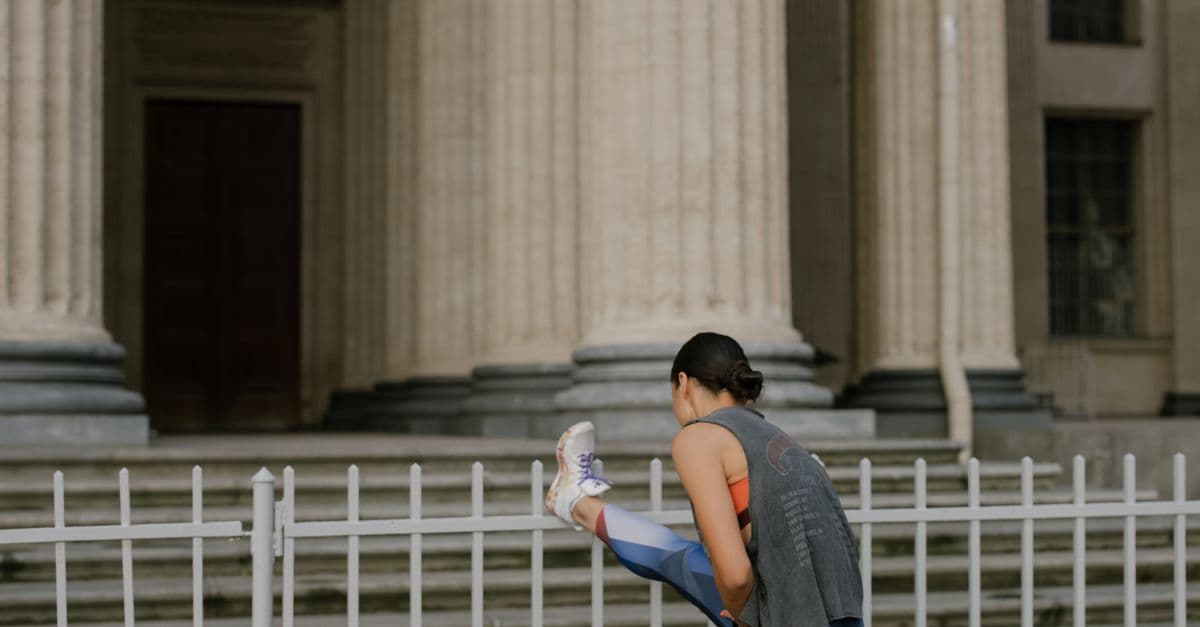
The hotel gym is a single treadmill, a wobbling spin bike, and a rack of dumbbells that stops at 12kg. It closes at 10pm, which is 3am on your body clock. You have a full day of meetings tomorrow. This is the reality of fitness on the road for most travellers — not a sleek facility with a personal trainer, but a compromise negotiated around jet lag, unfamiliar streets, luggage restrictions, and a schedule that leaves perhaps 35 minutes of genuine free time before you have to be somewhere.
Staying active while travelling is genuinely possible, but it requires a different mindset than the one that works at home. The goal is not to replicate your regular training. It is to maintain enough movement, load, and consistency that you return from a trip in roughly the same physical condition you left — and ideally in better mental shape from having used exercise as a tool for acclimatisation rather than a chore to be abandoned the moment the schedule tightened.
Why travel disrupts training more than it should
The obvious disruptors are time zone changes and schedule compression. But the less obvious one is decision fatigue. When everything around you is unfamiliar — the neighbourhood, the food, the language, the hotel room layout — the mental overhead of planning a workout rises sharply. The session that would have been automatic at home now requires deliberate thought, and deliberate thought under travel fatigue tends to conclude that the session can wait until tomorrow.
The solution is to make decisions in advance. Before you travel, answer three questions: where will you exercise (room, hotel gym, outdoors), what will you do (a specific routine you already know), and when does the non-negotiable slot fit into the day (morning before meetings, lunchtime, evening before dinner). Ambiguity kills consistency. A specific plan — “I will do 25 minutes of bodyweight work in the room at 7am before breakfast” — survives travel in a way that “I'll find time to work out” does not.
The case for a room-based routine
A bodyweight routine that requires nothing more than a 2m² floor space is the most portable fitness tool available to a traveller. No equipment, no gym, no running shoes required. The exercises that deliver the most in the least time for a general traveller are:
- Push-up variations — wide, narrow, decline (feet on the bed), slow eccentric — for upper body load without any equipment.
- Single-leg work — Bulgarian split squats using the bed or chair, reverse lunges, step-ups — for lower body volume that challenges balance and coordination as well as strength.
- Hip hinges — single-leg deadlifts, good mornings — to maintain posterior chain engagement that sitting on planes and in meetings quickly erodes.
- Core compression — dead bugs, hollow holds, slow mountain climbers — for deep stabiliser work that translates directly to posture on long flights.
- Pull-based work — door-frame rows, if available — the one movement that is genuinely hard to replicate without equipment but can be approximated with a resistance band in a jacket pocket.
A 25-minute circuit rotating through these categories — two to three rounds of four exercises, 45 seconds on, 15 seconds transition — provides enough stimulus to maintain muscle and cardiovascular baseline across a two-week trip. The key is not intensity; it is completion. A moderate session that actually happens beats an ambitious one that gets postponed because the hotel gym was closed.
Running in unfamiliar cities
Running is the highest-return travel exercise for travellers who already have a base level of fitness. It requires only shoes, and it doubles as orientation — there is no better way to understand the layout of an unfamiliar city than 40 minutes on foot at 6am. The practical issues are navigation and safety.
For navigation, download an offline map of the area before leaving the hotel. Plan a simple out-and-back route rather than a loop — if anything goes wrong, you simply retrace your steps. Keep the route well-lit and, for the first run in any new city, stay on main streets rather than shortcuts. Apps like Komoot and AllTrails have urban running routes contributed by locals, which surfaces paths that are genuinely pleasant rather than just technically runnable.
Safety varies enormously by city and neighbourhood. The standard advice is to run in the direction traffic faces so you can see approaching vehicles, leave one earbud out, carry your hotel key card rather than cash, and tell someone at the hotel where you are going and when you expect to return. In cities with significant air quality issues — which the weather and air quality tools can surface before you plan outdoor exercise — opt for indoor alternatives on high-pollution days. Exercising heavily in poor air quality produces more harm than the session is worth.
Heat and humidity are the other environmental variables that catch travellers out. A pace that feels comfortable in London in October will be unsustainable in Bangkok in August. Slow down more than you think necessary, hydrate before you leave rather than waiting until you are thirsty, and run in the early morning rather than midday. Acclimatisation to heat takes seven to fourteen days; most trips are shorter than that, so the adjustment never completes and the risk of overexertion stays elevated throughout.
Managing training across time zones
Jet lag does not affect all types of exercise equally. Aerobic capacity — your ability to sustain a run or a long circuit — drops noticeably in the first 24 to 48 hours after a long-haul flight, particularly on eastward travel. Strength performance drops less dramatically but reaction time and coordination are impaired. The practical implication: do not attempt a personal best, a maximum-effort session, or any high-skill training in the first two days after a significant time zone crossing. The body has enough to manage without adding physiological stress on top of circadian disruption.
What does help in those first days is gentle movement: a 20-minute walk outdoors in natural light, a short stretch sequence, a light bodyweight circuit. This serves two purposes — it keeps some movement in the schedule without overstressing a fatigued system, and the outdoor light exposure actively helps reset the circadian clock. Our guide to the science of jet lag covers the light and melatonin timing in detail; if you are serious about arriving functional, the two strategies — fitness management and circadian management — work best when combined deliberately.
By day three on a new time zone, most travellers are well enough adjusted to resume normal training intensity. If the trip is shorter than three days, train lightly or not at all in the gym sense, and instead focus on incidental movement — walking rather than taxis, stairs rather than lifts, ten minutes of stretching before bed to offset the sitting that long-haul travel accumulates.
What to pack (and what not to)
The equipment question depends entirely on luggage constraints. For carry-on-only travel, the answer is almost nothing: one resistance band (a loop band weighing under 50g) adds meaningful pull and hip work to a bodyweight routine and fits in a jacket pocket. Everything else — travel yoga mats, suspension trainers, weighted belts — takes up space and rarely justifies its weight.
The items worth considering:
- A loop resistance band — genuinely useful for glute activation, banded push-ups, and rows.
- Compression socks — not for training, but for the flight itself. Long-haul sitting causes lower-leg fluid accumulation that increases muscle soreness for the first day or two; compression socks reduce this measurably.
- Running shoes that double as walking shoes — the single equipment decision with the highest return. A versatile trainer means one pair of shoes instead of two, preserving luggage space while keeping running accessible.
- A foam roller — only if checking luggage and only if you genuinely use one. For most travellers, a tennis ball achieves 80% of the benefit at 2% of the weight.
What not to bring: a full set of gym kit for every possible session. Two sets of workout clothes, washed in the hotel sink if needed, are enough for any trip length. Over-packing kit for workouts that may not happen is one of the most common forms of travel over-optimisation.
Nutrition and recovery on the road
Protein intake drops reliably during travel because airport and hotel food skews heavily towards carbohydrates. This is not catastrophic for a short trip, but over two or more weeks it contributes to the muscle loss and fatigue that many frequent travellers attribute purely to jet lag. Simple habits help: choose the protein option at breakfast (eggs, yoghurt, or meat rather than pastries), carry a small bag of nuts or a protein bar for the flight gap when no good food is available, and prioritise restaurant dishes that include a clear protein component rather than ordering pasta every evening because it is the safe, familiar choice.
Sleep is the most important recovery tool available, and travel reliably disrupts it. The compounding effect — poor sleep, reduced recovery, an attempted hard workout — is one of the main reasons travellers return from trips feeling depleted. The protocol that works is accepting reduced training intensity in exchange for improved sleep. A moderate session followed by seven hours of sleep is more restorative than an ambitious session followed by five.
The 10-minute floor rule
On days when time or energy genuinely does not allow a full session, commit to ten minutes on the floor — a few sets of push-ups, a hollow hold, a couple of minutes of stretching. It maintains the habit, keeps the body in light use after a day of sitting, and is short enough that no schedule can legitimately exclude it. The sessions that matter most are the ones you almost skipped.
Frequency and expectations
A realistic target for a typical business or holiday trip is three sessions per week, of 20 to 35 minutes each. This is enough to maintain aerobic fitness and muscle mass with no meaningful loss over trips of up to three weeks. It is not enough to make progress — that requires more consistency and progressive overload than travel allows — but maintenance is the correct goal. Trying to use a two-week trip to get fitter than you were when you left is a recipe for injury, burnout, or both.
The travellers who sustain fitness habits across years of regular travel are not the ones who pack the most gear or find the best hotel gyms. They are the ones who have narrowed their routine to a small number of exercises they can perform anywhere, accepted that travel sessions will be shorter and lighter than home sessions, and stopped treating a missed workout on a travel day as a failure. Consistency across months matters far more than perfection within a single trip.
Before any long trip, check the expected weather and air quality at your destination using the Farlounge weather tool — it will tell you whether outdoor running is viable on the days you plan to be there, and flag the days when staying indoors makes more sense than pushing through.