
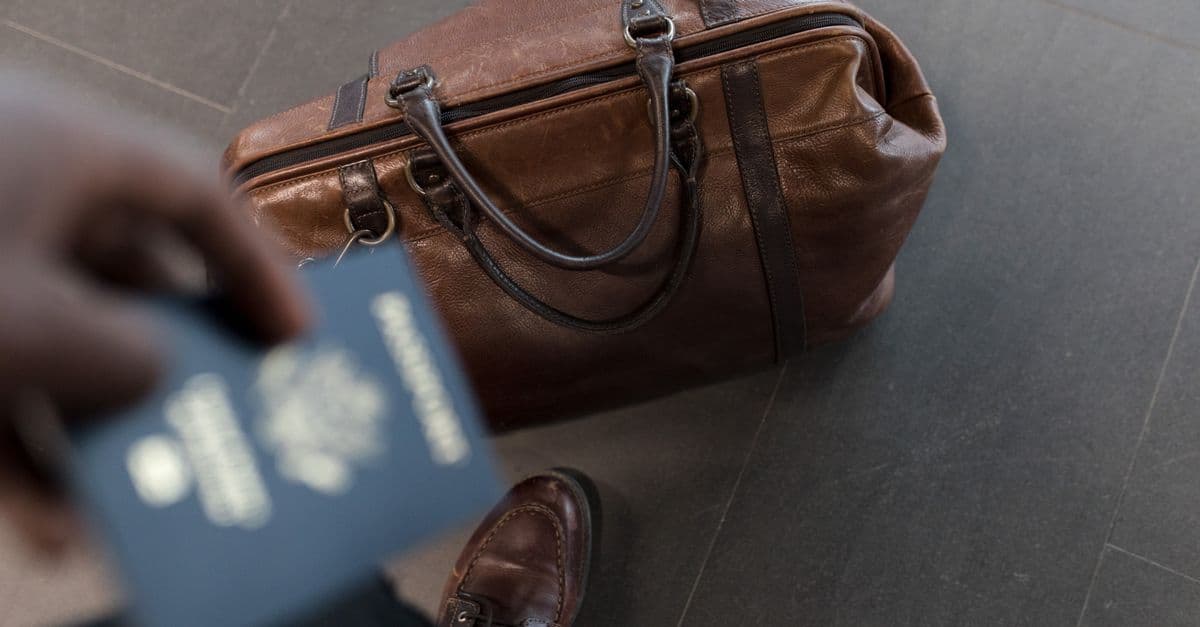
It begins at the security belt, when you realise there are approximately seventeen items to remove from a bag you packed with military precision the night before: the foldable pushchair, the car seat adaptor, the nappy bag inside the main bag, the spare liquids pouch, the snack container mistaken for a gel. The toddler, meanwhile, has taken off one shoe and is refusing to walk through the scanner.
Flying with a child under five rewards preparation far more than most travel scenarios, because the things that catch parents out are consistently the same — paperwork that seemed optional, pram policies that turned out to be carrier-specific, or a complete absence of entertainment strategy for hour seven of a long-haul. Here is the practical guide to getting it right in 2026.
Lap infants: the rules and the reality
An “infant” in airline terms is a child under two years old who travels on a parent's lap without their own seat. On most carriers this costs somewhere between 10% and 20% of the adult fare plus applicable taxes — it is not free. The infant still needs a ticket, still needs a passport (or a valid travel document), and still counts towards certain weight allowances.
A few rules that consistently catch parents out:
- Only one lap infant per adult is permitted. If you are travelling with two under-twos and only two adults, you still need to buy a seat for one of them.
- The child must be under 24 months on the date of the return flight, not the outbound. A child who turns two mid-holiday will need their own seat for the journey home — book accordingly.
- Most airlines require documented proof of age if the child's ticket category is queried. A passport is the most reliable document; a birth certificate works as backup but is not universally accepted at international borders.
- A lap infant does not have their own checked-bag allowance on most low-cost carriers. Full-service carriers — BA, Lufthansa, Emirates — typically add a 10 kg allowance for an infant fare.
For any flight longer than three hours, the lap-infant arrangement works against you regardless of how easy your child normally is. It is exhausting for the parent, unsettling for the toddler, and a genuine constraint on reaching anything in the overhead bin without disturbing both of you. On long-haul, buying the seat is almost always worth it — it allows a car seat (in which many under-fives sleep better), provides a tray for food and activity, and gives you somewhere to put the child while you eat.
The seat question — and what to sit in it
If your child is under two and has their own seat, aviation safety organisations generally recommend using an approved Child Restraint System (CRS) rated for aircraft. Airlines have varying levels of enthusiasm for this — some actively encourage it, some treat it as a mild inconvenience. Check your carrier's approved CRS list before travel; not all car seats legal for aircraft in one regulatory zone are automatically accepted in another.
CARES harnesses — a FAA-certified travel harness for children roughly 10–20 kg — are accepted on most carriers and work well for children who have grown out of infant car seats but are too small to sit comfortably in a standard seatbelt alone. Confirm acceptance with your carrier before buying one.
Bassinet seats — fold-down cots attached to the bulkhead wall — are available on most long-haul aircraft for infants under roughly 9 to 11 kg. They cannot be pre-selected on most carriers; you request one at booking or check-in, and they are allocated first-come, first-served. The practical approach: call the airline directly, request it at booking, and reconfirm at check-in. Weight limits are strictly enforced — the bassinet has a physical attachment limit.
Paperwork: what you actually need
Passports
Children — including newborns and lap infants — need their own passport for international travel. There is no child entry on a UK adult passport; this was abolished in 1998. A UK child passport lasts five years. Many countries also require at least six months' validity on arrival; check the Foreign, Commonwealth & Development Office (FCDO) guidance for the specific destination before you apply.
Consent letters
If a child is travelling with only one parent, or with someone who is not a parent — a grandparent, family friend, or nanny — some countries' border authorities will require a notarised letter of consent from the absent parent or from both parents respectively. This is most commonly enforced when entering South Africa, Mexico, Brazil, and several other Latin American countries. The FCDO recommends carrying a consent letter for EU travel too, to avoid complications at border control.
A proper consent letter should include: both parents' full names; the child's full name and date of birth; the accompanying adult's full name; the destination and travel dates; and contact details for the absent parent. Having it notarised — signed before a solicitor or notary — adds weight, though requirements vary by country.
Birth certificate
Worth carrying even if not technically required. Some airlines and border agents ask for evidence of the child's relationship to the accompanying adult — particularly on single-parent trips — and a birth certificate is the clearest available documentation.
Medical documentation for newborns
Most airlines will not carry a newborn under seven days old. Some long-haul carriers set the minimum at two weeks. If you are flying with a baby under three months, check whether your carrier requires a fit-to-fly letter from a GP — it takes minutes to obtain and prevents problems at check-in.
Strollers, prams and car seats
Almost every airline allows you to take a pushchair or travel system to the aircraft door at no additional cost, where it is tagged and stowed in the hold. You collect it either at the aircraft door or at the oversized baggage belt at the destination, depending on the airport.
The nuance is carrier-specific. Ryanair and some other budget carriers count a pushchair as one piece of checked baggage, which can affect your allocation. BA and most full-service carriers carry a pram free and outside the luggage allowance. If you are also checking a car seat — usually free, but counted as a piece on some low-cost carriers — check both policies before you fly.
For airport transit, a compact umbrella stroller is far more manageable than a full travel system. Many parents use a baby carrier or sling through security and the gate, then collect the stroller gate-side on arrival.
Car seats should always be put in a car seat bag for the hold. Airlines are not liable for damage to unbagged car seats. The bag protects the harness from grease and compression damage during loading.
Security with a child under five
Build in more time than you think you need. Security with an under-five consistently takes at least twice as long as without one. A few things that help:
- You are entitled to use pushchair-accessible security lanes at most UK and European airports. These typically have a wider belt and extra tray space for the collapsed pushchair frame.
- Milk and formula are exempt from the 100 ml liquid rule. Carry as much as you need for the journey. Security may test it — this is standard procedure.
- Baby food pouches, purées and solid snacks are not subject to the liquid restriction under UK and EU rules.
- A baby wearing shoes must have them removed, just as adults do. Easier to handle if the shoes are slip-ons for travel day.
Worth knowing
If your flight is delayed at the gate, you may be entitled to compensation under UK261. The flight delay calculator gives you a quick read on your rights — useful to check before the delay tips into an extended meltdown window.
What to pack (the non-obvious list)
The standard advice — nappies, wipes, spare clothes — is well covered elsewhere. The less obvious items that make a difference in the air:
- Small, unfamiliar snacks introduced only on board. Novelty sustains attention longer than familiarity does.
- Low-tech physical items alongside a tablet: a small pot of stickers, a wax crayon set, a new tiny figurine. Screens eventually bore; hands-on items reset the session.
- A change of clothes for the adult, not just the child. The mid-flight scenario where this matters will require no elaboration for anyone who has been through it.
- A lightweight muslin that can serve as a blanket, a blackout cover over the seat-back screen in a sleeping baby's eyeline, or an impromptu change mat.
- Paracetamol suspension in the correct dosage for the child's weight. Ear pain during descent is common in small children; a dose given before descent begins makes a measurable difference.
The packing list tool lets you build a trip-specific list — useful for filtering out items from adults-only trips and adding family-specific ones.
In-flight reality
Long-haul with an under-five is genuinely hard, and it helps to have realistic expectations rather than a plan that assumes the child will sleep for seven hours. A few things that consistently help:
- Cabin crew are broadly sympathetic and practically helpful. They have seen every version of this scenario. If you are struggling, asking for help is more effective than suffering in silence.
- Moving around the cabin during wakefulness is usually fine when the seatbelt sign is off. A walk to the galley resets a restless toddler faster than entertainment.
- Descent is the hardest part physiologically. Feeding — breast, bottle or a straw drink — during descent and initial approach helps equalise ear pressure. Starting before the descent begins is better than waiting for distress signals.
- Adjusting sleep timing before you fly makes the first night at the destination far easier. Shifting the child's bedtime by an hour toward the destination time zone for a few days before departure reduces the adjustment window significantly.
The other honest note is that some flights with small children are fine and some are not, and the difference often has more to do with circumstances — a delay, an ear infection, an over-tired departure — than with preparation. Being well-prepared narrows the gap but does not close it entirely. That is worth knowing before you board.
For context on what your child is entitled to if a flight is cancelled or significantly delayed — rights that apply regardless of age — the guide on what to do if your flight is cancelled at the gate covers the rebooking process and compensation rules under UK261.