
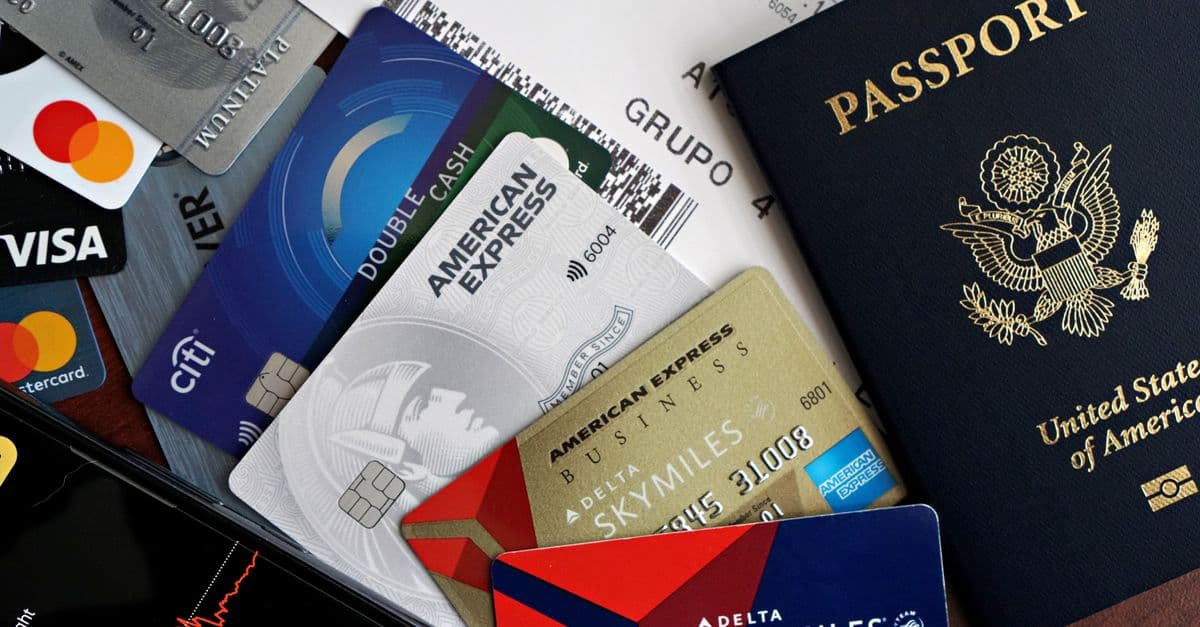
Every year, hundreds of thousands of UK travellers sign up for a rewards credit card with a specific trip in mind — a business-class seat to Tokyo, perhaps, or a free week in a Maldives overwater villa. The mechanics seem straightforward: spend on the card, collect points, fly for free. The reality is considerably more layered. Points devalue. Partner-booking rules shift. Availability windows require the kind of forward planning that borders on a second job. And the annual fee has to be earned back before the maths works at all.
This guide works through how travel-rewards cards actually function in 2026, who they genuinely suit, and the structural traps that quietly eliminate the value for a large share of cardholders.
How rewards cards earn points
Every UK travel-rewards card attaches a base earn rate — typically one to three points per £1 spent — with elevated rates for spending in particular categories: flights booked directly with the linked airline, hotel stays with partner chains, or occasionally dining and fuel. The earn rate on everyday spending is, in isolation, modest.
The real engine of these cards is the sign-up bonus: a lump of points awarded after meeting a minimum spend in the first two or three months. Depending on the card, that bonus can be anywhere from 5,000 to 100,000 points, and it is frequently worth more than six to twelve months of accumulated regular spending. UK cardholders currently have access to four main types:
- Avios-based cards (British Airways Amex, Barclays Avios Plus): earn Avios redeemable on British Airways, Iberia, Aer Lingus, and partner airlines in the oneworld alliance.
- Amex Membership Rewards cards (Gold, Platinum): earn transferable points convertible to Avios, Marriott Bonvoy, Delta SkyMiles, and a handful of other programmes.
- Hotel-linked cards (IHG Rewards, Marriott Bonvoy Amex): earn hotel points redeemable at specific chains, often with complimentary elite status as an annual benefit.
- Cashback-equivalent cards: return a flat percentage as statement credit, cashback, or a charity donation — simpler to understand but rarely the best-value option for frequent flyers.
What a point is actually worth
This is where honest analysis diverges most sharply from marketing copy. Points have no fixed value — they are worth whatever you can extract from a given redemption, and that figure varies by an order of magnitude depending on how and when you redeem.
An Avios point used on a short-haul cash redemption — replacing a £65 Gatwick-to-Barcelona ticket that costs 9,000 Avios plus taxes — delivers roughly 0.6p per Avios. The same points used to top up onto a partner-airline business-class long-haul seat, or routed through an airline with a distance-based pricing structure, can be worth 2p–4p or more. The difference in outcome is substantial enough to decide whether the card pays for itself.
The floor is almost always the programme's own cashback or retail-conversion rate, which is typically poor: 0.3p–0.5p per point. Redeeming Avios for Amazon credit or converting Membership Rewards to a statement credit is, in almost every case, the worst possible use of accumulated points. If you are regularly doing this, the card is not generating genuine value.
The annual fee calculation
Most meaningful rewards cards carry an annual fee. Entry-level airline cards charge £20–£25; mid-tier cards £95–£160; premium cards (Amex Platinum and its near-equivalents) charge £575 or more. The fee must be earned back before the card generates any net value.
A card charging £250 per year that earns 1.5 Avios per £1 spent requires approximately £32,000 of annual spending to break even on the fee alone — at the floor redemption rate of 0.5p per Avios. At a better redemption value of 2p per Avios, that break-even figure drops to around £8,000, which is far more achievable for a regular card user. The implication is clear: the card's effective value depends almost entirely on how you redeem, not on how much you spend.
Premium cards often offset the headline fee with travel credits, airport lounge access, and complimentary hotel status. If you use those benefits — the Priority Pass, the annual companion voucher, the included travel insurance — the effective cost of the card falls considerably. Our guide to airport lounges in 2026 has more on what lounge access is actually worth when you add it up across a year of trips.
The foreign transaction fee trap
Most UK rewards cards still levy a non-sterling transaction fee of 2.75–2.99% on every purchase made in a foreign currency. On £1,000 of holiday spending, that is £27–£30 lost directly to fees. The points earned on that same spend might generate 2,000–3,000 Avios — worth roughly £12–£60 depending on the redemption. In many cases, the foreign fee exceeds the reward.
This is one of the clearest reasons why a dedicated travel card — Starling, Wise, Revolut, or a specialist no-fee credit card — is the right tool for spending abroad, and a rewards card is better reserved for domestic use, or for flights booked directly with the linked airline. The guide to the real cost of travel money in 2026 models this in detail, including the full cost comparison across five common payment methods.
A notable exception: the British Airways Amex Premium Plus card offers the companion voucher, which requires a minimum annual spend. Some cardholders keep the card and use it for most domestic spending to reach that threshold — but switch to a fee-free card the moment they land abroad. That split approach works well if you can sustain the discipline; it is the optimal setup for a frequent flyer who also wants to keep exchange costs low.
Sign-up bonuses — the highest-value moment
If there is a single most important mechanic in travel rewards, it is the sign-up bonus. A welcome offer of 30,000 Avios can be worth anywhere from £150 at a poor redemption rate to £900 or more applied to a premium cabin seat. A 60,000 Membership Rewards offer from a premium Amex card, converted to Avios and redeemed carefully, can cover a significant portion of a business-class return to Asia.
The sign-up bonus is a one-time event tied to a minimum spend — typically £1,000–£3,000 in the first 60–90 days. Ideally, the spending should align with a planned large purchase: a holiday deposit, an annual insurance renewal, home improvements. Putting planned expenditure on the card and paying it off in full immediately produces the bonus at zero net cost.
Three practical considerations. First, applications affect your credit file — stacking multiple sign-up bonuses in rapid succession may harm short-term creditworthiness. Second, most cards bar applicants who held the same card within the previous 24 months, so the sign-up bonus is a finite opportunity on any individual card. Third, some of the most generous bonus schemes in 2026 are Amex products, which are not accepted everywhere — a Visa or Mastercard as a fallback remains useful.
When rewards cards genuinely make sense
Travel-rewards cards work best for a specific type of cardholder. The profile is: someone who pays off the full balance every month without exception; whose regular spend is sufficiently high to earn meaningfully (£10,000 or more per year in general card spend, or with a specific pattern of airline or hotel bookings); who is willing to invest some time understanding the programme's redemption sweet spots; and who travels frequently enough to actually use the points within the programme's expiry rules.
For that cohort, a well-managed rewards card can generate several hundred pounds of genuine value per year from a single card — and considerably more when sign-up bonuses are timed with large planned expenditures.
The situation looks quite different for the majority of casual cardholders. Our guide to booking flights with miles covers the availability constraints in detail — the experience of accumulating 50,000 Avios over two years and then discovering that the routes and dates you actually want are blocked or require an upgrade charge. That friction is real and should factor into whether the card makes sense.
When they do not
The maths turns sharply negative in two circumstances. The first: carrying a balance. Any interest charged at the card's typical 26–32% APR destroys the points value several times over. A single month of interest on £500 costs more than most cardholders earn in points over the same period. Rewards cards and revolving balances are genuinely incompatible.
The second: irregular travel patterns. Points programmes are designed around aspiration — the idea that accumulating points will eventually produce a free flight. For the occasional traveller who takes one short-haul return per year, the points earned on a mid-tier card will typically be worth less, in real terms, than the annual fee paid to earn them. A straightforward fee-free debit card, paired with a dedicated travel card for foreign spending, comes out ahead without requiring any programme knowledge.
The 2026 landscape
Devaluations have continued in 2026 as they have every year since 2020. British Airways reduced several long-haul Avios partner redemption values in late 2025. Marriott Bonvoy moved a significant number of properties to higher point categories at its annual reprice. The direction of travel across every major loyalty programme is consistent: points become worth less over time, and programme rules generally become less favourable.
This does not make rewards cards worthless — it makes timing more important. Earning points quickly and redeeming them soon afterwards is structurally smarter than building a multi-year stockpile for a hypothetical future trip. A large uninvested points balance is simply an exposure to devaluation risk.
It is also worth checking the cash component of any points redemption before booking — particularly for flights where the “free” ticket still carries substantial taxes and carrier surcharges. Use our currency converter to compare the cash value of taxes quoted in euros or dollars against what you would actually spend, so you can sanity-check whether the points redemption is genuinely cheaper than a paid fare.
The honest verdict
Travel-rewards credit cards are a genuinely useful tool for an organised, high-spending, full-balance-paying traveller who takes the time to find good redemptions. For that person, the economics work — sometimes handsomely. For everyone else, the value proposition is thinner than the marketing suggests. The annual fee needs to be earned back. The foreign transaction fee erodes rewards on holidays. Points devalue. Availability is a real constraint. And any month with an unpaid balance tips the whole calculation sharply negative.
The question worth asking before applying is not “what could I do with these points?” but “what will I actually do with these points, given how I really travel?” The honest answer to the second question determines whether a rewards card is a useful financial instrument or an expensive form of optimism.
Check your exchange rate
When redeeming points for flights with a cash tax component, use our currency converter to verify whether the surcharges quoted in a foreign currency represent a fair rate — or whether a paid fare on a no-fee travel card would come out ahead.